Stepping into the world of early childhood home education often feels like walking into an avalanche of conflicting advice. You see colorful social media posts featuring immaculate classroom setups, rigorous phonics charts, and exhaustive daily lesson schedules planned down to the minute. In reality, attempting to replicate a formal six-hour institutional school day with a three-year-old is a guaranteed recipe for tears and parental exhaustion. In my home education studio, homeschool preschool curriculum planning centers around short, joyful bursts of intentional play that nurture a lifelong love for learning.
Preschoolers learn best through movement, sensory exploration, and daily real-world rhythms. By adopting a flexible modular framework – focusing on twenty to thirty minutes of daily hands-on discovery paired with rich literature and outdoor play – you provide your child with an exceptional academic foundation without sacrificing the playful magic of early childhood.
Key Takeaways
Core guidelines for peaceful, effective preschool planning:
- Cap structured table learning at thirty to forty-five minutes total per day, divided into ten-minute increments.
- Structure lessons around broad weekly thematic units (nature, seasons, community helpers) to integrate subjects naturally.
- Rely on modular reusable learning binders rather than rigid single-use workbooks to reduce paper waste and prep fatigue.
- Prioritize read-aloud literature, gross motor outdoor exploration, and sensory play over repetitive drill sheets.
To save months of curriculum research and launch a complete early learning system effortlessly, Ready-made Kids Digital Products on plrbizhub.com provides modular printable binders formatted for flexible homeschooling and profitable digital resale.
Understanding Realistic Attention Spans And Developmental Windows
A helpful biological rule of thumb used by pediatric occupational therapists is that a child’s focused attention span equals two to three minutes per year of age. For a three-year-old, sustained seat work naturally maxes out around six to nine minutes before their nervous system craves movement. Expecting a preschooler to sit still for forty minutes of continuous worksheets ignores physiological brain development.
Legal and pedagogical advocacy resources from the Home School Legal Defense Association (HSLDA) emphasize that early childhood homeschooling thrives when families focus on informal play-based readiness, character building, and natural language development rather than formal testing standards. By respecting your child’s natural attention window, learning remains a joyful celebration rather than an emotional battle.
The Four Core Pillars Of An Early Learning Curriculum
Rather than purchasing sprawling boxed curriculums that cost hundreds of dollars, you can build a comprehensive home education routine around four foundational learning pillars:
Language and emergent phonological awareness
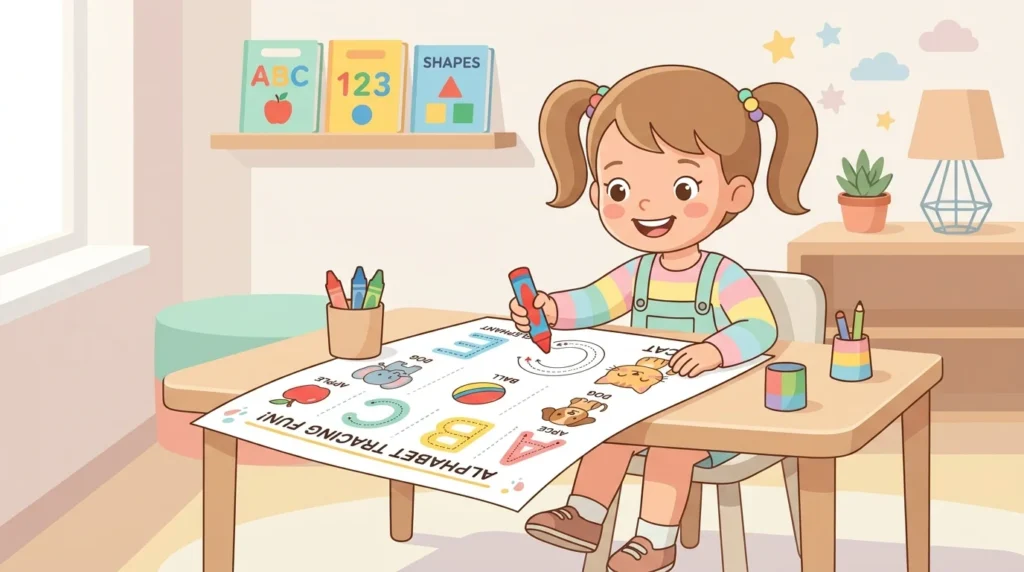
Reading readiness begins in the ear before it reaches the eye. Focus on rhyming games, clapping out syllables in family names, identifying beginning sounds, and singing nursery rhymes. Pair these acoustic games with visual letter tracing and tactile binders from our preschool alphabet tracing worksheets collection to solidify letter recognition naturally.
Tactile number sense and spatial math
Early mathematics should always be concrete. Counting real apple slices at snack time, sorting socks by color, and lining up toy cars from smallest to biggest build genuine mathematical logic. Use ten-frames, pattern strips, and interactive count-and-clip cards to bridge physical counting with written numerals.
Fine motor strength and bilateral coordination
Writing requires hand strength that develops through play. Include daily cutting practice, playdough sculpting, sticker peeling, and bead lacing. These activities build the hand musculature required for fluent handwriting without premature pencil fatigue.
Living nature study and sensory science
Science at the preschool level is all about wonder. Watch caterpillars transform into butterflies, plant sunflower seeds in small paper cups, mix baking soda with colored vinegar, and collect fallen leaves on afternoon nature walks. Connecting these outdoor experiences with printable observation logs grounds scientific curiosity in real tactile memories.
Thematic unit studies versus skill-based progression
A frequent dilemma when planning preschool curriculum is deciding whether to organize weeks around fun themes (like “Ocean Life” or “Dinosaurs”) or around rigid developmental skill tracks (like mastering letter B or counting up to five). The secret to sustainable planning is blending both approaches: choose an engaging thematic backdrop that excites your child’s imagination, and embed foundational skill practice seamlessly within that theme. An ocean theme easily encompasses counting starfish, tracing letter S for shark, and experimenting with water sinking and floating.
If you want a pre-organized, complete bundle that integrates all four pillars into ready-to-print modular units, the complete kids digital products bundle delivers fully editable Canva files ready for your classroom or digital shop.
Structuring A Gentle Daily Flow Without Rigid Time Slots
Rigid hourly schedules rarely survive toddlerhood. Instead of scheduling “Math at 9:00 AM and Phonics at 9:30 AM,” organize your day around predictable rhythm blocks anchored to daily meals and naps:
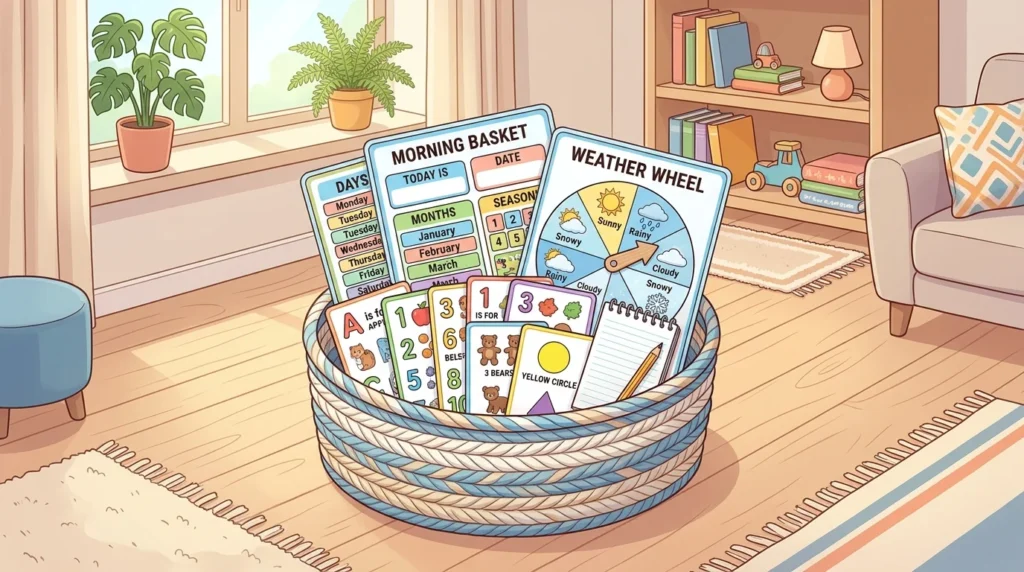
- Morning Connection (15 minutes): Gather after breakfast with your homeschool morning basket printables. Check the calendar, discuss the weather, read an illustrated poem, and do a quick five-minute letter tracing sheet.
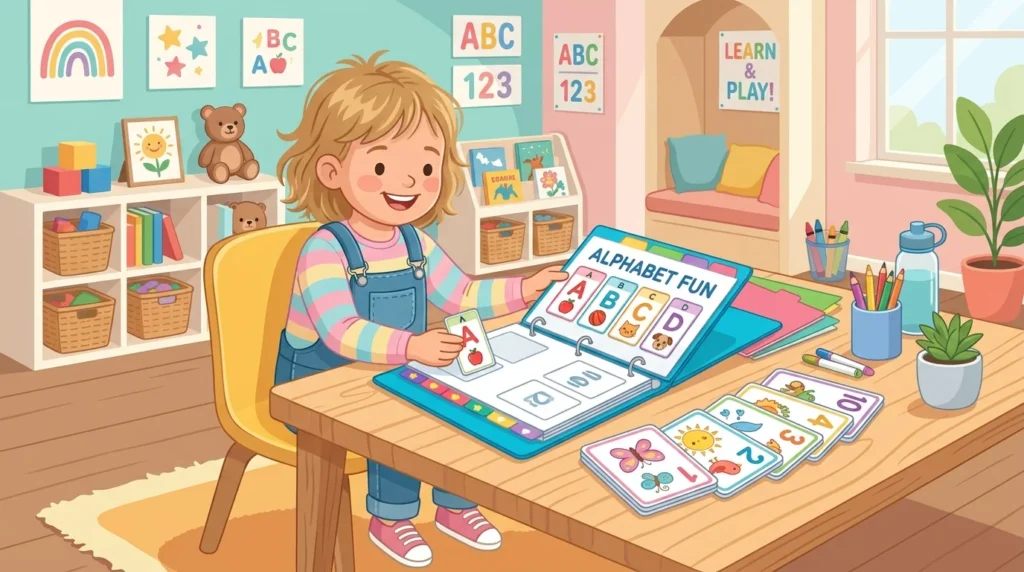
- Active Hands-On Center (15 minutes): Open your preschool learning binder for ten-frame math games, velcro sorting, or scissor cutting practice.
- Outdoor Movement and Free Play (60+ minutes): Head outside for park trips, sensory mud kitchens, tricycle riding, or nature scavenging.
- Afternoon Quiet Rest (30-45 minutes): While younger toddlers nap, older preschoolers engage quietly with toddler quiet time busy books and audiobooks.
Pairing this daily flow with visual schedules from our guide on preschool daily routine charts gives young children clear visual predictability throughout the day.
Monetizing Complete Curriculum Bundles For Digital Sellers
For digital creators, all-inclusive preschool curriculum bundles represent the highest customer lifetime value in the parenting niche. When parents find a curriculum system that feels gentle, structured, and easy to print at home, they gladly purchase the complete multi-month package.
Package your curriculum with clear weekly pacing guides, supply checklists, book recommendation lists, and video flip-through previews. Showing potential buyers how simple it is to slip printed sheets into reusable binders removes overwhelm and drives exceptional conversion rates. Discover more actionable digital product strategies across our library at plrbizhub.com.
Frequently Asked Questions
How many hours a day should I homeschool my preschooler?
Thirty to forty-five minutes of intentional table work per day is more than enough for three- and four-year-olds. The remainder of their day should consist of rich free play, outdoor exploration, imaginative pretending, and shared family reading.
What should I do if my preschooler refuses to do worksheets?
Do not force it. Step away from table work and switch to multi-sensory play: build letters with playdough, trace numbers in sand trays, or jump across chalk circles outdoors. Relational joy and curiosity are infinitely more important than completing a piece of paper.
Do I need to follow a formal state curriculum for preschool?
In most jurisdictions, formal compulsory school attendance does not begin until age six or seven (kindergarten or first grade). Preschool is a flexible developmental window where parents have complete freedom to follow their child’s natural pace and curiosity.
Can I sell homeschool curriculum bundles created with commercial PLR templates?
Yes. Commercial PLR templates give you the legal authorization to rebrand, customize lesson pacing, add your unique voice in Canva, and sell the finished printable files directly to parents and educators worldwide.
Homeschooling preschool is not about checking boxes or rushing ahead; it is about building a secure, wonder-filled foundation for lifelong discovery. By focusing on connection over perfection and play over pressure, you give your child the greatest educational gift of all: the joy of learning.