When toddlers pick up a crayon for the first time, their natural impulse is to make broad, sweeping circular marks across the page. Turning those joyous scribbles into controlled letterforms requires a patient sequence of motor coordination, visual-spatial awareness, and muscle memory. In my homeschool room and printables design studio, I treat preschool alphabet tracing worksheets not as drill sheets, but as guided invitations for young hands to explore lines, curves, and strokes with zero pressure.
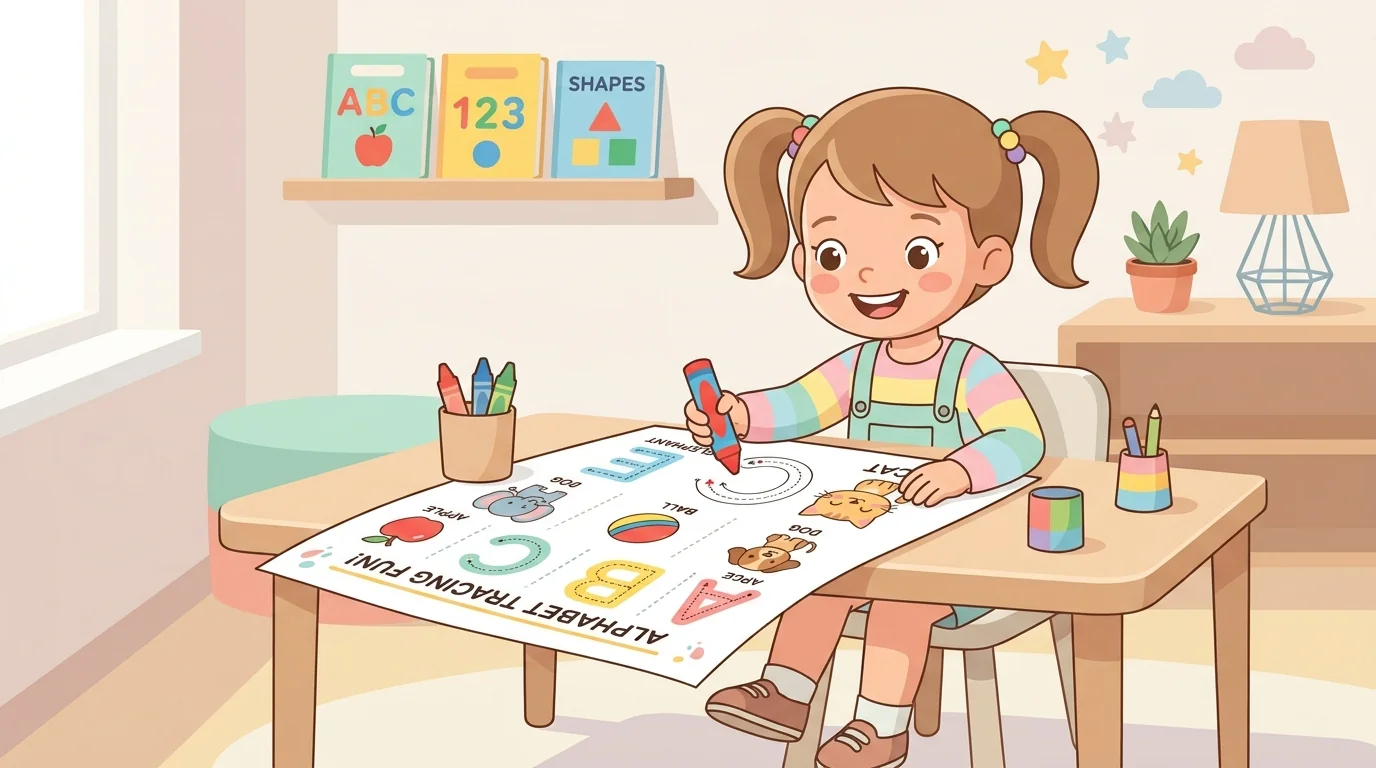
If you hand a three-year-old a standard lined sheet packed with tiny letters, you’ll immediately see frustration settle in. Effective early handwriting printables break letter formation into manageable sensory steps. By pairing directional arrows, large tracing tracks, and engaging illustrations, we create a positive bridge between tactile play and formal writing readiness.
Key Takeaways
Essential takeaways for building effective early handwriting routines:
- Start with gross pre-writing strokes before introducing full alphabet letters to build wrist stability.
- Select oversized stroke paths with clear numbered directional arrows so beginners understand where to start.
- Use dry-erase pockets or heavy lamination to let toddlers erase mistakes instantly without tears.
- Keep daily tracing sessions under ten minutes to preserve focus and positive learning associations.
To launch your own educational printables store or expand your homeschool toolkit without building letter worksheets from scratch, Ready-made Kids Digital Products on plrbizhub.com provides editable commercial templates that convert immediately.
Understanding Pre-Writing Strokes Before Letter Formation
Before children can trace the letter B or M, their fingers need to master eight developmental strokes: vertical lines, horizontal lines, circles, cross lines, right and left diagonal lines, squares, and X shapes. If you leap directly into letter tracing without reinforcing these foundational strokes, children often struggle with awkward pencil grips and fatigue.
I always structure early tracing packs so the first five pages contain purely non-letter paths. We trace rain falling from clouds (vertical lines), roads stretching across a meadow (horizontal lines), and spinning pinwheels (diagonal crosses). These simple visual metaphors turn motor practice into playful storytelling. Research published through the Education Resources Information Center (ERIC) highlights that explicit pre-writing stroke practice significantly accelerates subsequent handwriting fluency and pencil grip comfort in early childhood classrooms.
Top-to-bottom and left-to-right progression
In western alphabets, fluid writing relies on a consistent top-to-bottom and left-to-right tracking motion. When toddlers start tracing on blank paper, they naturally push their pencil upward or wander backward across the page. Quality tracing sheets incorporate visual anchors, such as a green dot indicating the starting position and a red star at the stopping point. Over a few short weeks, this intuitive visual feedback builds correct muscle memory automatically.
Key Design Elements Of High-Performing Alphabet Worksheets
Whether you design activity pages for your own kids or sell digital printables online, subtle graphic details make a massive difference in usability. Cheap clip art and cluttered margins overwhelm young eyes and drain cognitive energy away from the actual writing task.
Oversized letter tracks with guided numbered arrows
Preschoolers lack the fine finger dexterity required for half-inch college-ruled lines. The ideal letter height for beginners sits between one-and-a-half to two inches. Within that generous track, include clear numbered circles showing Stroke 1, Stroke 2, and Stroke 3 with directional arrows. This layout gives children self-correcting independence, so they don’t have to guess whether the round loop or the straight stick comes first.
Multi-sensory stroke cues and dot patterns
Rather than using solid gray lines, I prefer starting with hollow outline tracks that children can finger-trace with textured materials before holding a pencil. You can have them roll thin playdough snakes to press inside the letter contours, line up small stickers along the path, or dab dot markers down each stroke. Once their finger understands the spatial shape, transition to dashed line overlays for pencil or marker practice.
If you want a complete library of professionally designed templates that incorporate these exact pedagogical principles, the complete kids digital products bundle contains ready-to-edit Canva files with uppercase, lowercase, and pre-writing stroke pages ready for your branding.
Integrating Alphabet Tracing Into A Multi-Sensory Routine
A worksheet should never exist in isolation. When you combine paper tracing with tactile materials, learning sticks faster and children view writing as an exciting sensory discovery rather than desk work. Here is how I organize a typical fifteen-minute handwriting station:
- Sand or Salt Tray Tracing (3 minutes): Pour colored sensory sand into a shallow wooden tray. Display the target letter card and let the child draw the letter using their pointer finger. A gentle shake resets the tray instantly.
- Air Writing with Big Arm Movements (2 minutes): Stand up together and trace giant invisible letters in the air using whole-arm shoulder mechanics. This activates gross motor proprioception.
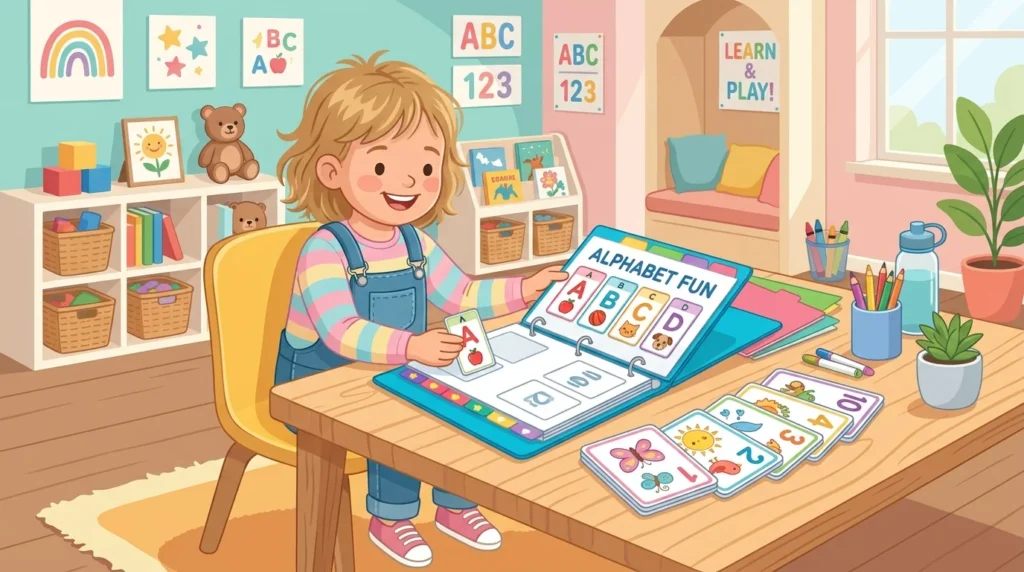
- Reusable Binder Tracing (5 minutes): Slip the day’s tracing worksheet into a laminated page protector or dry-erase pocket. Using a fine-tip dry-erase marker, trace the letters three to five times.
- Sticker or Dot Stamp Finish (3 minutes): Reinforce letter recognition by finding and dotting the target letter among distractor letters at the bottom of the page.
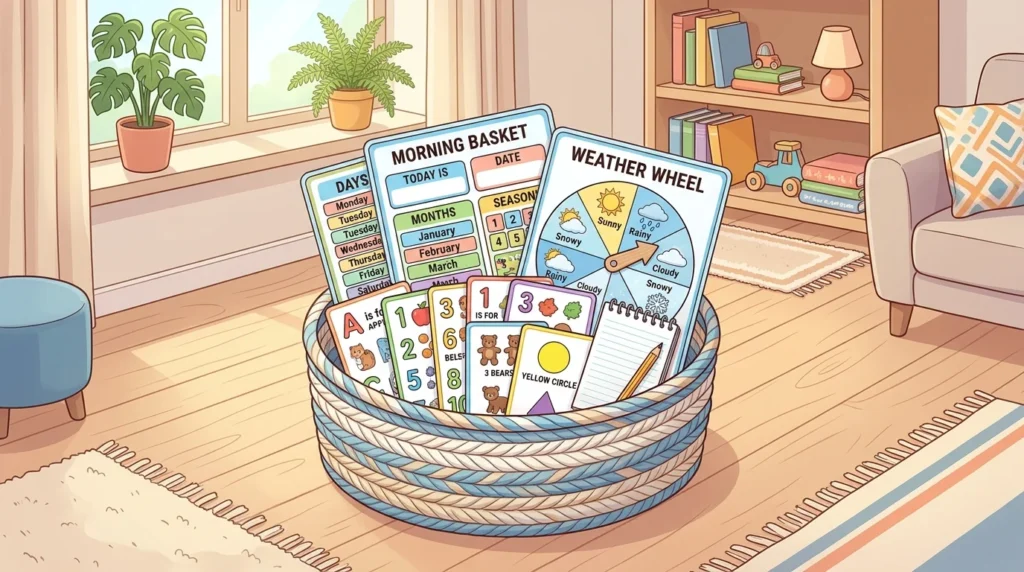
This sequence fits smoothly into your daily schedule alongside homeschool morning basket printables, giving kids a predictable rhythm that sparks enthusiasm each morning.
Uppercase Versus Lowercase Letters: Where To Start
One of the most frequent debates among early childhood educators centers on whether to teach uppercase or lowercase letters first. Uppercase letters consist primarily of straight lines and simple circles with uniform heights, making them physically easier for three-year-olds to draw without running into baseline spacing confusion.
However, lowercase letters make up over ninety percent of all written text in books and signs. My balanced approach introduces uppercase letters first for early confidence, focusing on straight-line letters like L, T, I, H, and F before moving into tricky curved letters like S, G, and R. Once a child masters grip pressure and basic straight strokes, introduce matching lowercase pairs so they build simultaneous visual recognition.
For more ideas on organizing these lessons systematically into modular binders, explore our complete guide to preschool learning binders and companion fine motor skills activity sheets.
Best Writing Tools For Little Hands
Standard full-length adult pencils create excessive top-heavy torque when held by tiny hands. This forces children into an awkward fist grip that strains their wrist tendons. Pairing the right writing implement with your tracing sheets makes an immediate difference:
- Broken Crayons: Snapping standard wax crayons in half forces children to hold them with their thumb, index, and middle fingers, naturally promoting a proper tripod grasp.
- Golf Pencils: Short, lightweight wooden pencils provide the ideal balance for four-year-old hands without requiring bulky silicone grip attachments.
- Chubby Washable Dry-Erase Markers: The slick surface of laminated sheets combined with smooth marker glide removes friction, allowing hesitant writers to make bold, expressive marks without wrist fatigue.
- Felt-Tip Coloring Pens: High pigment saturation gives instant visual reward with very light downward pressure, perfect for children building hand strength.
For digital creators looking to sell printables, creating buyer guides that list these recommended supplies inside your product download packs adds substantial perceived value, leading to glowing five-star shop reviews on plrbizhub.com.
Frequently Asked Questions
At what age should children start using alphabet tracing worksheets?
Most children are ready for gross pre-writing tracing around age three, starting with horizontal lines, curves, and finger painting. Formal alphabet tracing usually becomes effective between ages three-and-a-half and five, depending on individual hand strength, interest, and scissor-cutting progress.
Should I correct pencil grip immediately if my child holds the marker awkwardly?
Avoid turning pencil grip into a battle. Instead of constantly adjusting their fingers manually, provide small tools like broken crayons and golf pencils that naturally encourage a pincer grasp, and incorporate fine motor activities like playdough squeezing and clothespin pinching to strengthen finger muscles naturally.
How can I make tracing worksheets reusable to save paper and ink?
You can slide printed pages into heavy-duty clear dry-erase pockets or laminate them using three-mil or five-mil thermal pouches. Children can trace repeatedly with dry-erase or wet-erase markers, and you can easily wipe them clean with a microfiber cloth or baby wipe.
Can I sell alphabet tracing worksheets created with commercial PLR templates?
Yes, commercial use PLR templates from reputable platforms allow you to rebrand, customize colors, bundle with companion worksheets, and sell the finished PDF printables directly on your own website, Shopify store, or digital shop.
Building early handwriting skills is a gradual adventure rooted in sensory exploration and playful repetition. By offering thoughtfully spaced letter paths and celebrating every wobbly curve, you give young learners the confidence to express their thoughts on paper with pride.