Young children do not experience the world solely through their eyes and ears. They explore through touch, pressure, movement, and physical manipulation. Handing a tactile learner a static worksheet with instructions to “sit quietly and circle the answer” frequently leads to frustration and disengagement. In my homeschool space and digital design workshop, sensory learning preschool printables bridge physical play with cognitive development, turning abstract lessons into vibrant multi-sensory discoveries.
When you design or select printables that invite children to roll textured playdough, pinch dried beans into ten-frame grids, or feel textured tracing tracks, learning becomes an interactive game. This sensory-rich approach honors how young brains actually develop, paving the way for joyful, self-motivated learning.
Key Takeaways
Actionable principles for designing tactile sensory printables:
- Design printables as interactive backdrops for physical manipulatives rather than passive coloring sheets.
- Incorporate textured elements like kinetic sand, sensory rice, playdough, and water beads onto laminated mats.
- Provide clear physical boundaries on the page to help children naturally organize their tactile supplies.
- Use 5-mil thermal lamination to create waterproof surfaces that withstand wet and sticky sensory materials.
To meet soaring parental demand for kinesthetic early childhood resources without spending hundreds of hours drafting tactile mats, Ready-made Kids Digital Products on plrbizhub.com delivers editable sensory learning templates ready for your storefront.
The Science Of Multi-Sensory Cognitive Processing
Early childhood development guidelines published by the Centers for Disease Control and Prevention (CDC) highlight that preschool children learn and build neural pathways most effectively through active physical play and multi-sensory exploration. When multiple senses – visual, auditory, tactile, and proprioceptive – are stimulated simultaneously, the brain constructs multiple associative pathways to the same concept.
For example, when a four-year-old learns the letter S, merely looking at a printed letter activates visual recognition. But when they trace an S shape pressed into scented lavender playdough, feel the smooth resistance against their fingertip, and vocalize the “ssss” snake sound, four distinct sensory lobes fire in unison. This multi-sensory reinforcement cements memory retention far deeper than rote flashcards ever could.
Top Sensory Formats To Integrate Into Activity Binders
Creating sensory printables does not require complicated manufacturing. By pairing laminated mats with household items, you create rich learning stations effortlessly:
Playdough smash and build mats
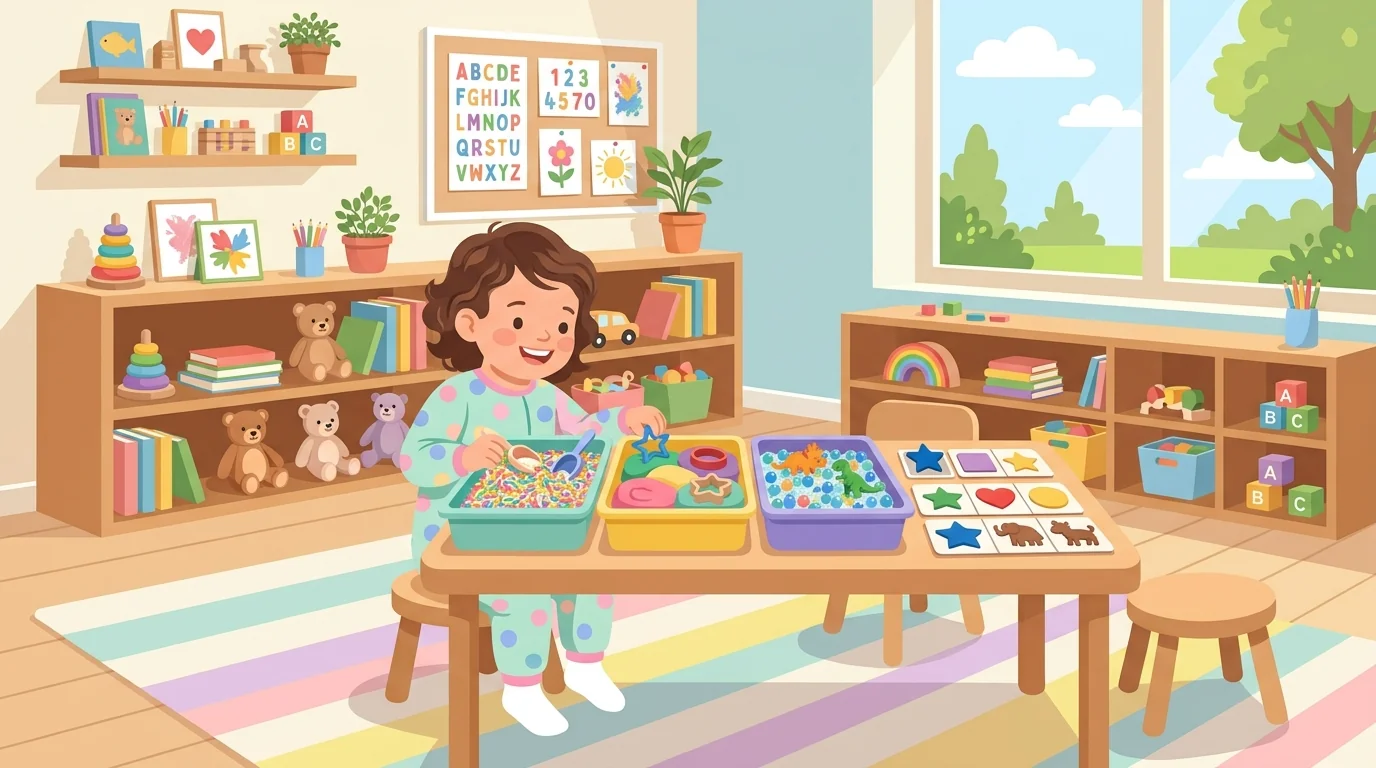
Playdough mats are undisputed favorites among preschoolers. Design full-color backgrounds – such as an apple tree, a monster with funny teeth, or a starry night sky – featuring empty circular landing targets. Children roll small balls of playdough, place them on the targets, and “smash” them flat with their palms as they count aloud or identify target letters. This provides heavy proprioceptive muscle feedback that calms energetic toddlers.
Sensory bin search and find cards
Fill a shallow bin with dyed blue rice, dried black beans, or smooth river stones. Bury small laminated picture tokens inside the sensory filler. Provide the child with a printed checklist or matching board where they search through the tactile medium, unearth a token, wipe off the grains, and match it to its silhouette on the mat. The physical sensation of sifting through rice satisfies sensory cravings while maintaining structured focus.
Finger tracing tracks with textured toppings
Oversized hollow outline tracks can be filled with clear gel, whipped shaving cream, or dry craft materials like sandpaper cutouts. Toddlers glide their fingers through the medium along directional arrows. This bridges smoothly into early handwriting alongside our preschool alphabet tracing worksheets and strengthens hand endurance alongside fine motor skills activity sheets.
Tactile texture scavenger hunt checklists
Transform indoor exploration into a tactile science investigation by printing texture scavenger hunt cards. Children take their laminated clipboard around the house or garden searching for objects that feel “fuzzy” (a wool blanket), “bumpy” (a pinecone), “smooth” (a polished stone), or “cold” (a stainless steel spoon). They attach velcro checkmark tokens onto the sheet as they discover each texture, sharpening observational vocabulary.
Sensory calm-down and emotional regulation mats
When toddlers feel overwhelmed or overstimulated, sensory breathing mats offer immediate comfort. Featuring gentle winding finger-labyrinths with soothing nature scenes, children trace their finger slowly along the path, inhaling as the path ascends and exhaling as it dips downward. Combining rhythmic finger gliding with deep belly breathing provides children with concrete self-soothing tools that restore emotional equilibrium.
If you want a complete library of these interactive formats ready for digital publishing, the complete kids digital products bundle includes ready-to-edit Canva templates with playdough, sorting, and matching layouts.
Designing Waterproof And Mess-Resistant Printables
Sensory play can get messy. Sticky dough residue, washable finger paint, and damp water beads will quickly destroy unlaminated paper. Follow these design and assembly tips to make your sensory printables virtually indestructible:
- Heavyweight Thermal Pouches: Always use 5-mil thermal laminating pouches. The thicker plastic creates an airtight seal that repels moisture and oils from homemade playdough.
- High-Contrast Color Palettes: Use bold, saturated primary and secondary colors. Light pastel graphics can get lost under colored playdough or translucent sensory beads.
- Generous Margins: Leave at least one inch of white space around the active play area so toddlers have room to rest their hands without spilling manipulatives off the page.
- Easy-Wipe Coatings: Keep a microfiber cloth and a small spray bottle of water nearby. Quality lamination wipes clean in three seconds, ready for the next session.
To integrate these sensory mats into an orderly daily schedule, explore our tutorials on complete guide to preschool learning binders and preschool daily routine charts.
Commercial Demand: Why Parents Seek Screen-Free Sensory Downloads
In an age dominated by smartphones and tablets, conscious parents are actively investing in screen-free alternatives that encourage tactile interaction. Sensory printables stand out on platforms like Shopify and educational storefronts because they offer an antidote to passive screen time.
When you market sensory activity packs, emphasize the developmental benefits in your product descriptions: improved hand strength, calm nervous system regulation, and imaginative exploration. Show realistic mockup photos of colorful playdough and wooden beads resting on the printed mats to spark buyer imagination. Discover more digital product strategies at plrbizhub.com.
Frequently Asked Questions
What are the safest sensory bin fillers for two- and three-year-olds?
For young toddlers who still put objects in their mouths, choose taste-safe fillers like dry rolled oats, crushed cereal, or large wooden blocks. Avoid small water beads, raw dried kidney beans, or marbles until children are reliably past the mouthing stage.
How do I store sensory printables and physical fillers neatly?
Store laminated activity sheets flat inside plastic project cases or ring binders. Keep corresponding sensory fillers (like dyed rice or dried beans) in sealed airtight plastic containers or zippered pouches alongside the mats for instant grab-and-go access.
Can playdough mats be used without lamination?
If you don’t have a laminator, slide printed sheets into clear plastic page protectors or heavy-duty dry-erase pockets. While thermal lamination provides the smoothest wipe-clean surface, heavy plastic sleeves work very well as a budget-friendly alternative.
Can I sell sensory playdough mats created with commercial PLR templates?
Yes. Commercial PLR templates give you the legal authorization to customize layouts in Canva, brand the materials with your logo, and sell the finished printable files directly to parents and educators with full commercial rights.
Sensory learning reminds us that children learn best when they are free to touch, experiment, and manipulate their environment. By combining colorful printables with tactile materials, you transform everyday learning into a joyful playground of wonder and discovery.