Long before children learn to write legible sentences, their small hand muscles must complete rigorous physical training. Gripping a pencil, stabilizing paper with an opposing hand, and cutting along curved lines require sophisticated neuromuscular control. In my homeschool room and design studio, I treat fine motor skills activity sheets as purposeful finger workouts that turn essential physical therapy exercises into delightful games.
Many traditional worksheets merely instruct children to draw lines from column A to column B, which can quickly feel tedious for active preschoolers. High-impact activity sheets incorporate multi-sensory mechanics such as cutting paths, dot-marker stamping, sticker placement, and hole-punching challenges that actively build grip strength and wrist stability.
Key Takeaways
Key guidelines for implementing impactful fine motor printables:
- Prioritize hand strength, wrist extension, and pincer grasp before demanding precise letter formation.
- Integrate varied tools such as child-safe loop scissors, plastic tweezers, dot markers, and clothespins.
- Provide thick cutting borders and visual stop signs to build cutting confidence gradually.
- Keep activity sessions short and focused to avoid hand fatigue and muscle cramping.
To expand your educational store with ready-to-sell fine motor resources that parents adore, Ready-made Kids Digital Products on plrbizhub.com offers fully editable Canva templates designed for high engagement and rapid publishing.
The Biomechanics Of Preschool Hand Development
Developing fine motor coordination follows a predictable cephalocaudal and proximodistal anatomical trajectory: control develops from the center of the body outward. A child must establish shoulder stability and elbow control before their wrist can stabilize, and wrist stability must precede independent finger dexterity. Clinical insights from the American Occupational Therapy Association (AOTA) emphasize that early childhood activities strengthening intrinsic hand muscles directly support pencil grasp development and academic endurance.
Separation of the two sides of the hand
Hold a pen in your hand right now. Notice how your thumb, index, and middle fingers grip the shaft (the skill side of the hand), while your ring finger and pinky tuck securely into your palm to provide structural stability (the power side). Toddlers naturally start by gripping tools with all five fingers in a palmar grasp. Effective activity sheets encourage the separation of these two hand sides by having children hold a small cotton ball or penny against their palm with their pinky while using their three skill fingers to color or pinch.
Bilateral hand coordination
Cutting paper requires two hands doing completely different tasks simultaneously: one hand operates the scissors with opening and closing motions, while the helper hand holds and turns the paper. Bilateral activity sheets present curved lines where the helper hand must actively rotate the page so the cutting hand maintains a stable cutting plane. This cross-body coordination develops vital neural connections across the brain’s hemispheres.
High-Performing Types Of Fine Motor Worksheets
When curating or designing fine motor printables, incorporating multiple physical actions maintains child interest and exercises distinct muscle groups. Here are the most effective formats:
Scissor cutting practice strips
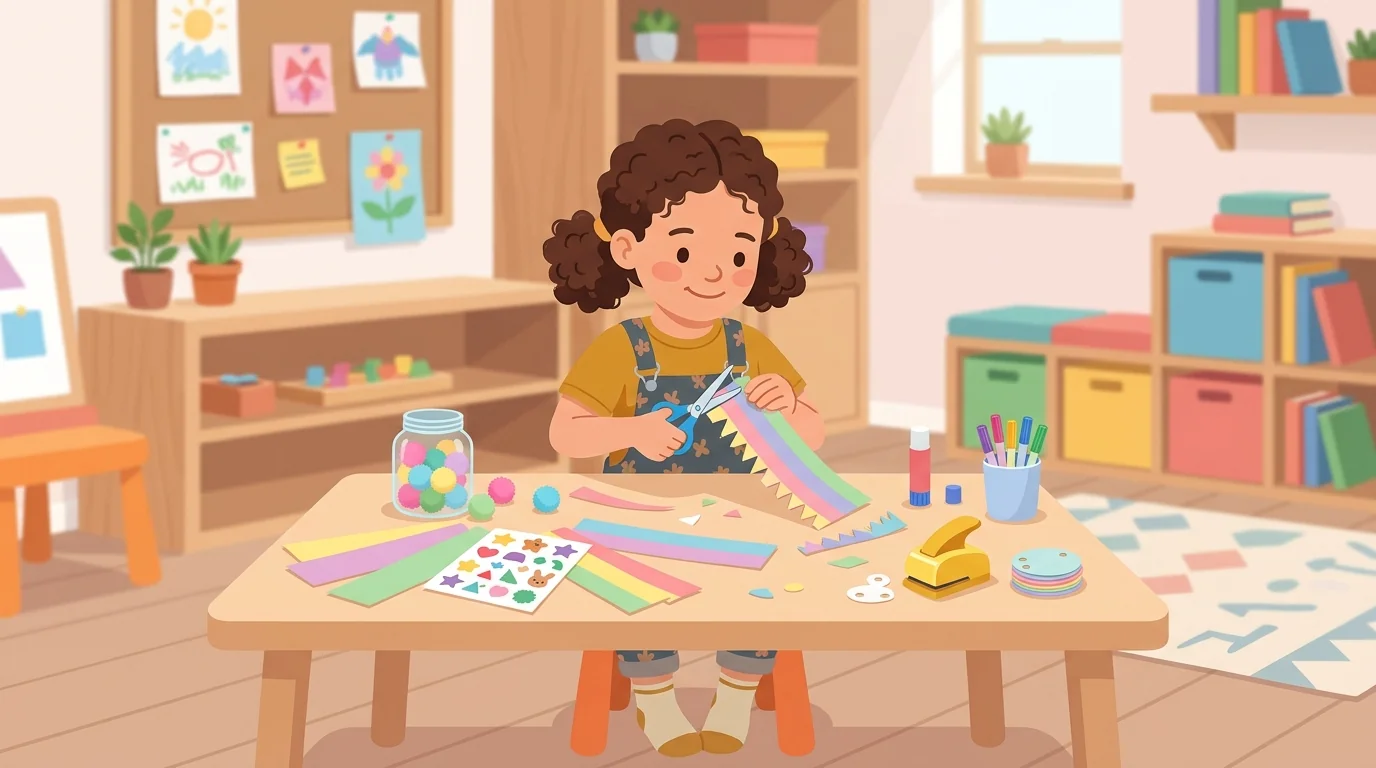
Beginners should never start with complicated zigzags or intricate shapes on full letter-sized sheets. Instead, start with narrow paper strips featuring single straight snips – cutting “grass” blades or snipping confetti tickets. Once single-snip mastery is achieved, graduate to continuous straight cutting paths, followed by gentle ocean waves and finally right-angle maze paths. Using bold black cutting guidelines with a quarter-inch stroke thickness ensures young eyes can track the blade without losing orientation.
I recommend printing these cutting strips on brightly colored cardstock rather than plain white paper. The high contrast helps children differentiate the paper edge from the cutting line, and the sensory satisfaction of hearing crisp paper snip clean fuels their motivation to practice repeatedly.
Dot marker and circle sticker target mats
Peeling tiny circular reinforcement stickers off a backing sheet is an elite pincer grasp exercise. Children must coordinate their fingernails and thumb pads with incredible precision. Target sheets featuring illustrated animals or vehicles with empty circles invite children to peel and press stickers, or stamp washable daubers directly into each circle to build hand-eye accuracy.
Pin-poking and hole-punching challenge cards
Pin-poking involves placing a printed design over a foam mat or carpet square and using a large pushpin to poke small holes along outline dots. This exercise forces a perfect three-finger pencil grasp and strengthens the web space between the thumb and index finger. Once finished, children hold the paper up to a sunny window to see light sparkling through their punched design.
If you are looking for ready-to-sell packages that include scissor strips, sticker mats, and pre-writing tracks in one organized kit, the preschool activity learning bundle provides editable Canva templates ready to rebrand and publish under your own shop name.
Connecting Fine Motor Sheets With Multi-Sensory Play
Paper activity sheets become ten times more effective when paired with physical manipulatives that encourage tactile resistance. Here is how I set up fine motor exploration stations in our learning area:
- Playdough Line Sculpting: Place the activity sheet inside a clear pocket. Have the child roll thin playdough snakes and press them precisely along the printed wavy and zigzag lines.
- Tweezers and Pom-Pom Transfer: Place small craft pom-poms in a bowl. Have children pick up individual pom-poms using plastic training tweezers and place them onto designated spots on the printable.
- Clothespin Clip Cards: Print small counting or color-matching cards on heavy cardstock. Children squeeze spring-loaded wooden clothespins to clip the correct answer, building significant thumb pressure.
- Bead Threading Guides: Print animal outlines with punch holes along the perimeter. Children lace colorful yarn or shoelaces through the holes, reinforcing fine motor sequencing.
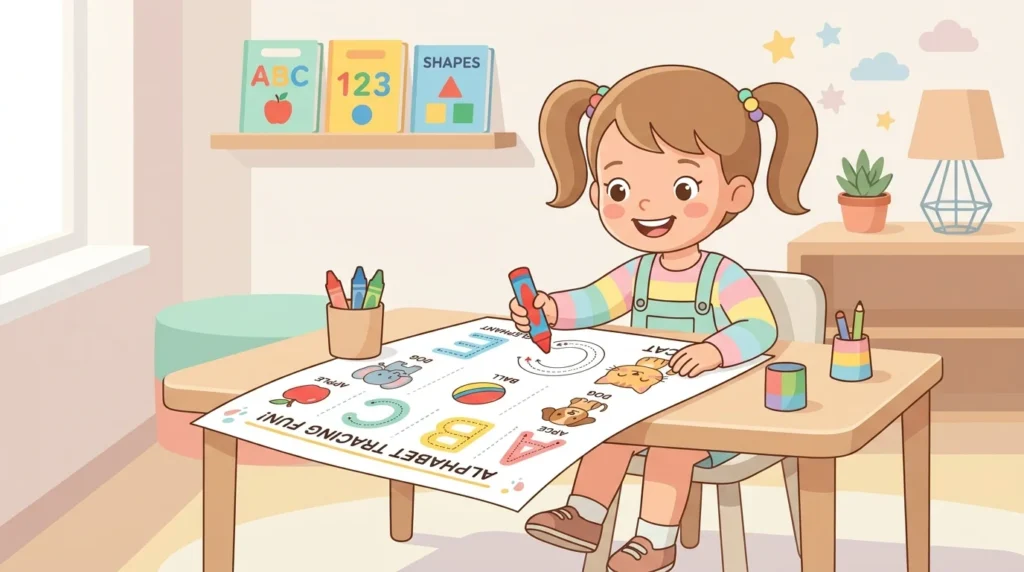
These exercises pair naturally with preschool alphabet tracing worksheets and enrich quiet time routines alongside toddler quiet time busy books.
Best Practices For Paper Weights And Printing Tools
The physical paper you choose directly influences a preschooler’s success. Standard twenty-pound copy paper flops over when a child tries to cut it, bending under dull toddler scissors and creating immense frustration. For cutting activities, print on sixty-five-pound cardstock, which remains rigid enough for beginners to cut cleanly without folding.
Similarly, for reusable tracing and sticker sheets, using heavy lamination pouches allows you to peel off reusable gel stickers or wipe away dry-erase markers without damaging the underlying print. You can find more practical production advice across our tutorials on plrbizhub.com.
Frequently Asked Questions
How can I tell if my child’s hand is fatigued during worksheet practice?
Signs of hand fatigue include shaking fingers, pressing so hard that paper tears, switching to a fist grip, complaining that their hand hurts, or abruptly losing interest. When these signs appear, stop immediately and switch to gross motor play or finger stretches.
What kind of scissors should beginners use?
Begin with spring-action training scissors that automatically pop back open after each squeeze. This lets toddlers focus entirely on closing their fingers around the blades rather than struggling to push the scissor loops open.
How many minutes a day should preschoolers spend on fine motor sheets?
Five to ten minutes of focused, positive practice per day is plenty for two- to four-year-olds. Consistency and positive associations are far more valuable than lengthy sessions that lead to hand strain.
Can I sell printable cutting strips and motor worksheets online?
Yes. Fine motor worksheets are in constant demand on platforms like Teachers Pay Teachers and Shopify storefronts. Homeschoolers, occupational therapists, and preschool teachers regularly purchase digital downloads to refresh their classroom centers.
Strengthening little hands is an investment in your child’s creative expression and academic independence. By infusing fine motor practice with colorful, hands-on play, you turn daily coordination exercises into cheerful milestones of childhood growth.